
“Festivals are such a strong part of UK culture,” says Mike Waywell, UK Marketing Lead at Klarna. “What we do as a brand is ask ourselves, how can we show up and mean something to a customer in that market? How can we add value to a UK festival?“
It wasn’t too long ago when major festivals were branded with corporate beer logos, sponsored by energy drinks and partnered with lad culture deodorant companies. People want more from their weekender now, though.
Festivals aren’t just places where the bare minimum is to be expected and cultural lines aren’t so strict anymore. Metalheads want to listen to rock while drinking rioja and rave heads who would be nursing sore heads in the morning now go for morning festival fun runs and gym sessions. The continuous rise of ticket prices also means that hundreds of thousands of tickets per year are sold in monthly instalments.
Naturally, brands are tapping into this major sea change. One of them is Klarna, the Swedish-born finance company who are seeing future value in grass fields.
This started in 2019 through a collaboration with Dorset’s We Out Here, a Gilles Peterson-presented festival for the new wave of underground jazz, Afrobeat and alternative sounds for undeniably cool customers. When this was a success, they then partnered with Mighty Hoopla, the pop-heavy London festival for fans of Vengaboys and vogue alike.
In 2026, Suffolk’s Latitude Festival was presented by Klarna. Klarna had its branding on posters, line-up announcements, water bottles and all the usual terms and conditions that come with such a collaboration. But this partnership went beyond just a logo, says Mike.
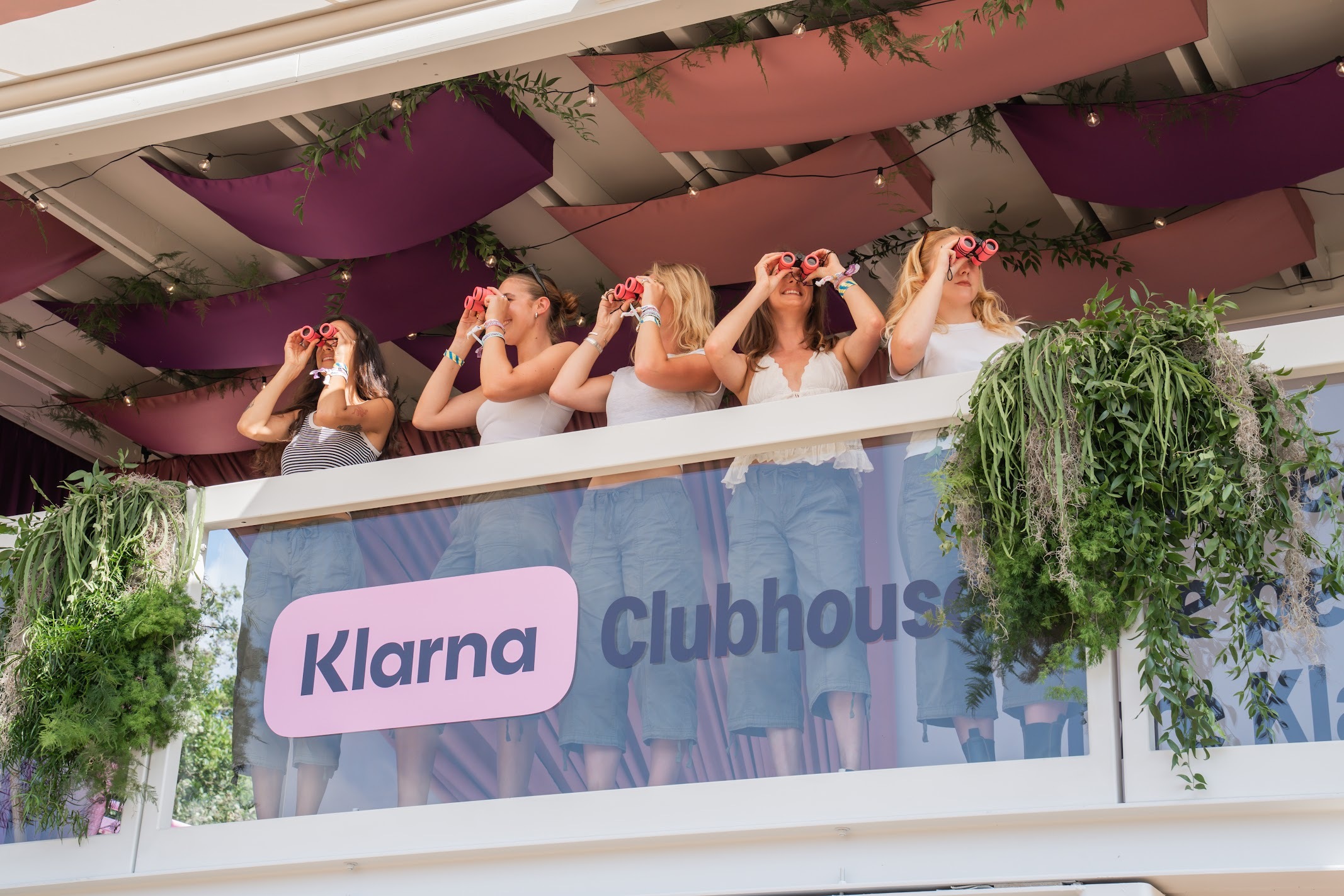
At Latitude the company presented its Klarna Clubhouse, a VIP space for any one of its customers. There were places to charge your phone, games to play to win prizes and spaces for relaxation. Across the Latitude site Klarna users could also received discounts on food and drink if they used the company’s bright pink debit card.
“This is all about adding value and providing a very clear benefit for the customer and festival,” says Mike. “The customer is saving money, but for the festival we’re encouraging people to use the traders on-site. There’s a very clear role for us to be there which benefits everybody.“
Klarna’s involvement in the festival industry sits in the middle of a Venn diagram in what people buy at a festival and how they spend their money throughout the year.
Aside from Guinness, which enjoys a near Taylor Swift level of fandom, the heritage beer brands which were once major festival sponsors are options most people avoid at your local pub. People don’t, or at least shouldn’t, consume copious amounts of energy drinks 365 days of the year. Festival-goers want to bring their home comforts to the field, including the services they use. And people don’t gravitate towards brands just through convenience, they align with how a person lives all year round.
This means that a company like Klarna, while being a finance company, can position itself almost like a fashion brand. It also works in their favour that multi-billion pound corporations aren’t quite the faceless entities they once were. Competitors like Monzo, who presented this year’s Big Feastival, are also aligning themselves with festivals who promote a weekend in a field as a lifestyle. This year, Starling Bank partnered with Cornwall’s Boardmasters to offer 10% discount on drinks, merchandise, and upgrades, while multinational neobank Revolut hosted a stage at Budapest’s Sziget Festival in the summer.
There’s a very obvious appeal for companies like Klarna to align themselves with festivals. Festivals promote youthful hedonism, are relatively free of scandal, attract the hard to reach 18-35 demographic and those with the disposable income to spend on VIP extras.
But first and foremost, to make all this work, it needs to be good for business. For Klarna, festivals provide the numbers to make it worth their while. “Festival have such an ecosystem of touchpoints for a customer,” says Mike. “There’s a pre-phase, where you get your tickets, camping gear and outfits. Then, you go to the site where you buy your food and drinks. Then there’s a post-festival period, where people buy tickets for the next year. There’s a cycle where consumers are are fully involved in the journey.“
That said, it’s also important for a brand to not simply want to jump on a bandwagon but add real experiential value, says Mike. “When we’re looking at how we partner and who we partner with, we always want to make sure it’s a strong fit for both the festival and the customers,” says Mike. “We don’t want to just show up and put a logo on something. That doesn’t add any value.“
Mike says that knowing the finer details of your audience is key to making these types of partnerships work.
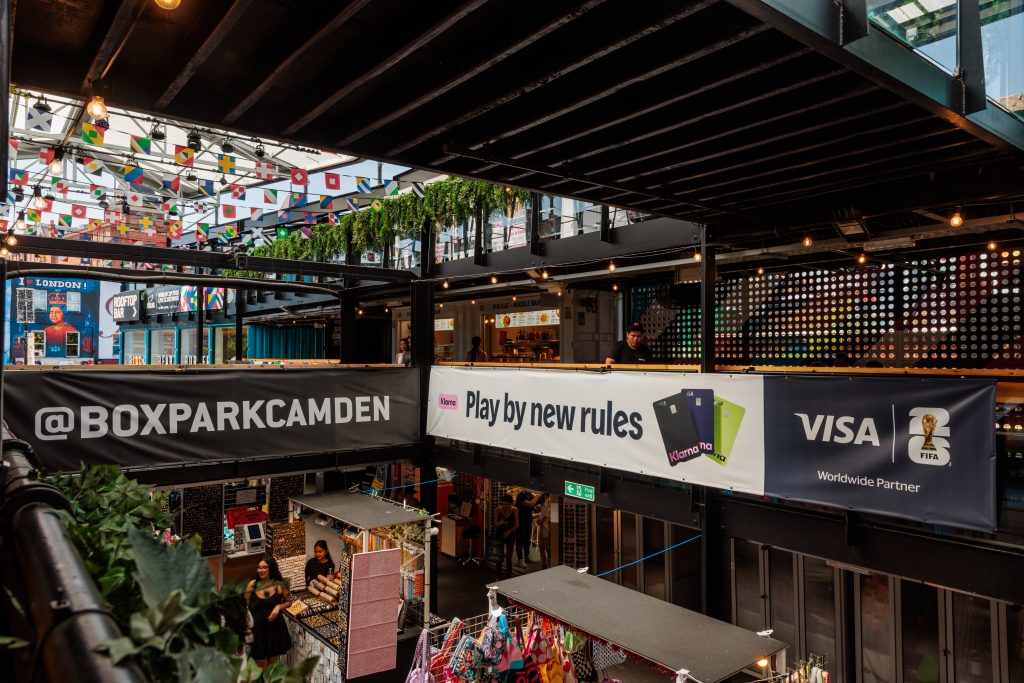
Mike points to Klarna’s 2026 partnership with UK’s Boxpark venues, which host World Cup parties alongside food festivals and, on occasions, karaoke sing-a-longs featuring ‘Barry from Eastenders’. While Klarna is a global company, it still aims to know the cultural intricacies of the country they operate in. “We’re moving more into these everyday space where people spend their money,” says Mike. “These are cultural spaces, whether it’s a festival or a Boxpark.”
These efforts go hand in hand with the ever-changing priorities of a typical festival-goer. VIP areas are not just an added extra, they’re expected. But with a company like Klarna, they have the resources to bring those meaningful experiences to all festival-goers, whether through paid for extra perks or not.
“Everyone loves like an exclusive access at festival, whether that’s backstage access with a better view, somewhere where they can access Wi-Fi and charge their phone or something else,” says Mike.
In Mike’s words, Klarna is becoming more than a “buy now, pay later” company and into a bank, a company that’s used on a daily basis and not just one weekend of the year. “The goal is for us to be an everyday money partner. We want to be seen on the same level as a regulated bank now,” says Mike.
Festivals, says Mike, are a part of making that happen. “The cool thing about a festival is that they’re never a locked thing,” says Mike. “There’s always there’s always room to play with them, and the cool thing about having a relationship with a festival is that you can share ideas. We can do this here, build this there. Festivals are malleable, and ultimately allows us to create the best experience for people.”