
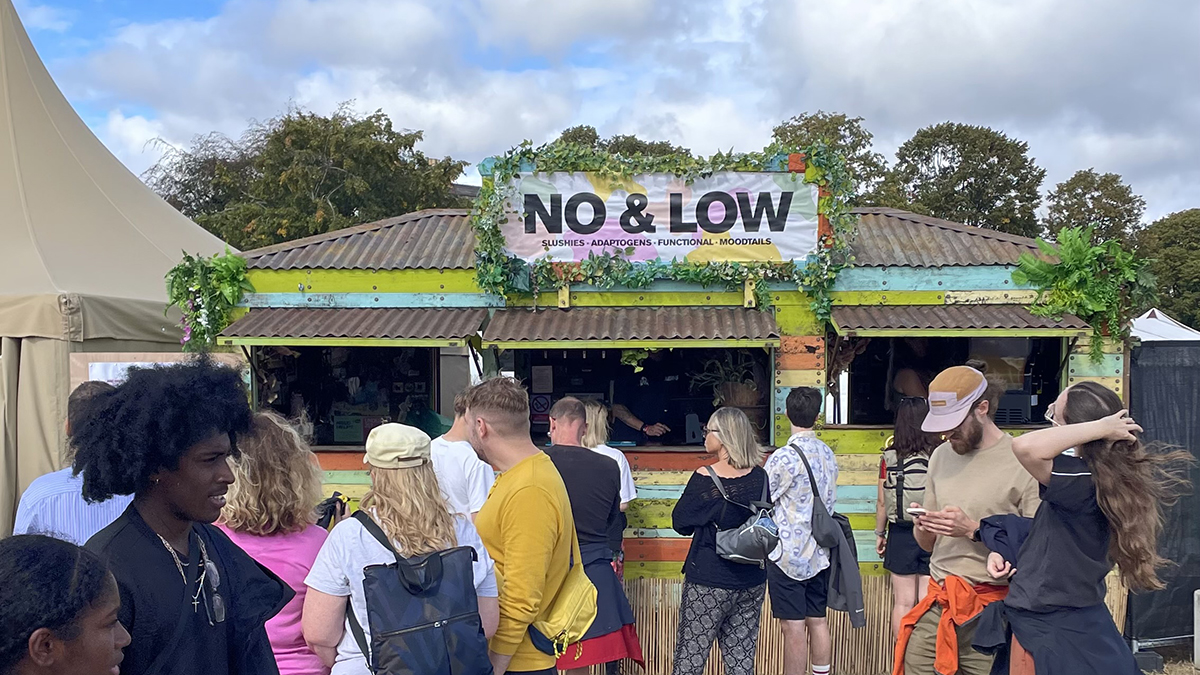
Much has been said about Gen Z’s attitude to drinking, and we’re all too familiar with headlines calling them the ‘sober generation’ and the youth swap gin for gyms. With this wider discourse, it is no surprise that the alcohol industry has seen a steady pivot towards low- and non-alcoholic drinks in recent years.
Low- and non-alcoholic options have been prevalent in fields and venues this summer. Where no-alcohol options may have been a nice addition in the past, they now appear to be a must-have. But are there options beyond cans of Guinness 0% (other brands are available)
Founder of ARC B CIC, Javier Serrano or Javi Tanke as he’s known in Bristol, thinks that functional drinks – drinks that provide physiological or health benefits beyond just hydration and nutrition – could be another alternative to an alcohol-free festival experience. ARC B’s mission focuses on sober infrastructure at live events, most notably at The Arc Bar in Bristol. This year, Javi and the team also brought its Moodbar concept to both Boomtown and FORWARDS festival this summer.
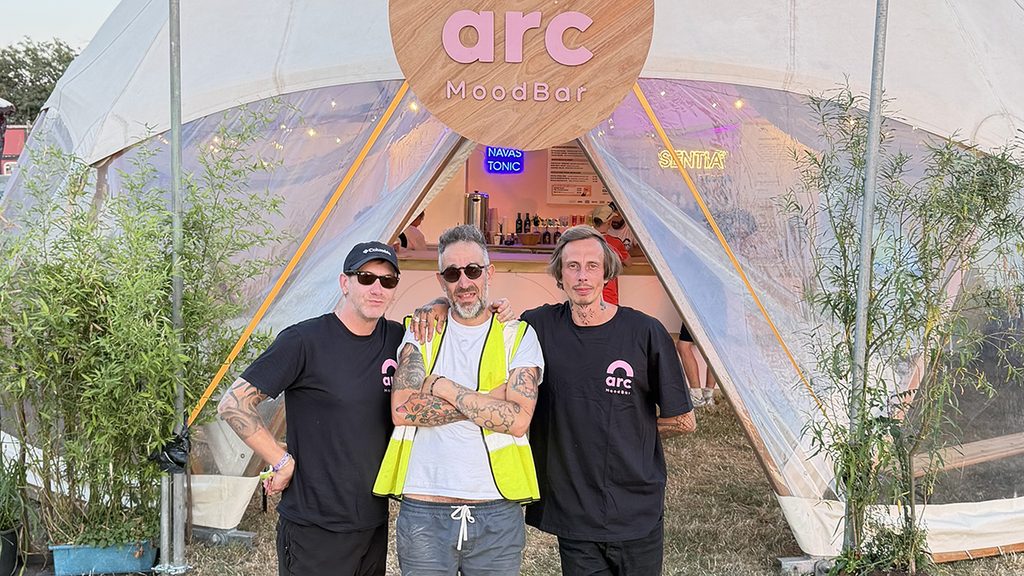
Situated in Boomtown’s Thrutopia district, The Arc Moodbar gave like-minded people a place to meet up and share a space. “At Boomtown, we programmed talks, sober meet-ups and discussions around nightlife, connection, consent and changing drinking culture,” says Javi. “The Arc Moodbar became somewhere people could drink, recover, meet, dance and engage with ideas. It was a cultural space as well as a drinks space.”
On the menu at The Arc Moodbar was a selection of functional drinks, some of which included adaptogens, substances derived from certain plants or fungi which have traditionally been used in herbal medicine. These are claimed to help the body respond to stress. In the UK, they are regulated and sold as food supplements rather than medicines, and evidence for their health benefits varies. Functional drinks will not be for everyone; some organisations that ARC B CIC have worked with aren’t keen on anything that could alter the mood of someone in recovery, for example.
Festival-goers, whether they are drinking, sober or, as Javi says, “sober-curious”, can go to The Arc Moodbar and ask for a drink or a ‘mood cocktail’ centred on eliciting a certain feeling.
“Some people come to me and say, ‘I have a bad tummy. What can I drink?’ Then we suggest trying something. Sometimes people just think that we are like a pharmacy. In a way, that is what it is,” Javi says. “In a festival, people come in the morning and are hungover and wonder what they can have to make them feel better. We have drinks which are specially designed for that.”
Making up part of the wellness area at Boomtown, the Arc Moodbar gave Javi the opportunity to see how festivals still misunderstand where these non-alcoholic spaces sit within a festival programme. Wellness areas are important parts of a festival, giving crowds space to unwind and find an experience different from the standard offerings.
The problem with plonking The Arc Moodbar in a wellness area away from the main festival, according to Javi, is that people buying these drinks are often still drinking alcohol or are sober-curious. They want to be involved in the music, but perhaps not the holistic side.
But Javi thinks the two go hand in hand. Describing himself as a lifelong raver, he points out that the birth of illegal raves and dance culture did not originally include alcohol. But as raves were shut down and legitimate clubs emerged, this is the point when alcohol was introduced into the space.
“Cultures can become commodities, so when you get into the bars and they sell you alcohol, this fundamentally changes the experience of dance music, especially,” he explains. “With dance music, you will always be more into the music, the people and the connection if you have less alcohol, because alcohol is a depressant.”
This is why Javi would like to see The Arc Moodbar integrated within the main part of a festival. “What a festival should be thinking is not just about doing a feature bar somewhere on the other side of the field,” Javi says. “Let us do it in a place where people can come together, dance, experience electronic music and drink together without getting drunk.”
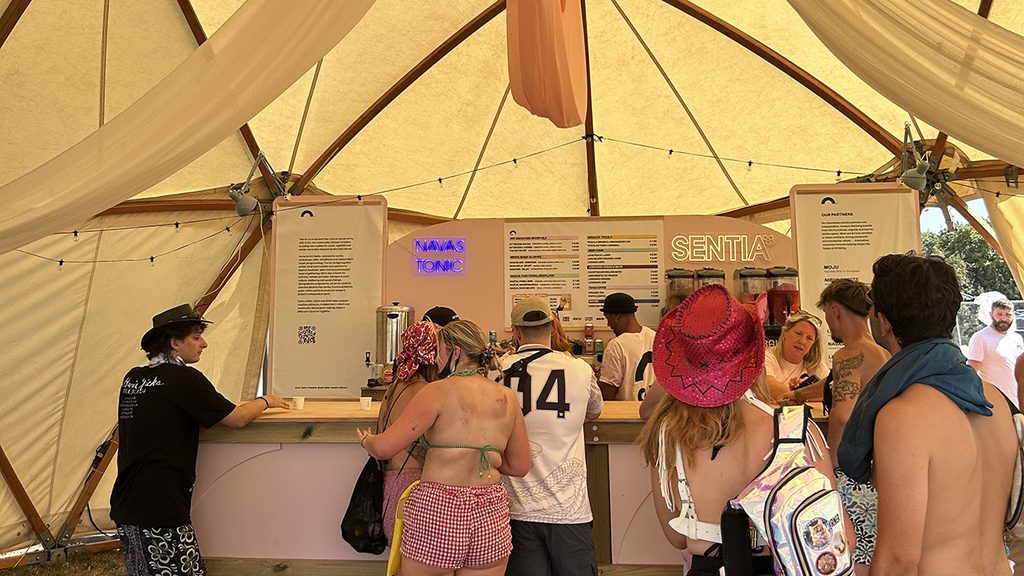
Another element of alcohol-free spaces is harm reduction. Festivals are spaces of experimentation and freedom from the everyday. This can create risks that Javi hopes The Arc Moodbar and similar spaces can help mitigate by building understanding between attendees and the spaces they choose to occupy.
“These types of spaces can help festivals think more creatively about safety. A drinks programme that includes credible alternatives, clear information and spaces for people to reset should sit alongside welfare teams, medical services, drug safety initiatives and safeguarding policies,” he explains. “No single intervention solves festival harm, but a more varied and thoughtful drinks environment can contribute to the overall picture.”
Getting festivals to understand the potential of alcohol-free spaces is one side of the coin; the functional drinks brands themselves are the other. A lot of the brands Javi brought to Boomtown and FORWARDS are local and often small-batch. ARC B CIC’s role with these functional drinks brands is to help educate them on the festival industry, from incentives for bars and distribution cuts to how to produce a drink that can be sold at festivals.
“Some brands don’t have the right product, and we want to work with them,” Javi says. “There’s one brand in Bristol who does amazing drinks, but they have them in glass bottles which aren’t allowed on many festival sites. If you want to come to a festival like Boomtown, you can perhaps create a ready-to-drink, pre-mixed cocktail or a brand-new product.”
In a competitive non-alcoholic drinks market, this may mean many smaller brands don’t make it. But Javi is hopeful that, in time, we will see a wider shift in the range of drink options on bar menus beyond 0% branded lagers. “For us, the ultimate goal is for every pub, bar and club to have at least a 30% offering of functional, healthy, organic drink choices on the menu. Not just to cater for those who don’t drink or for sober people, but to cater for everyone.”