

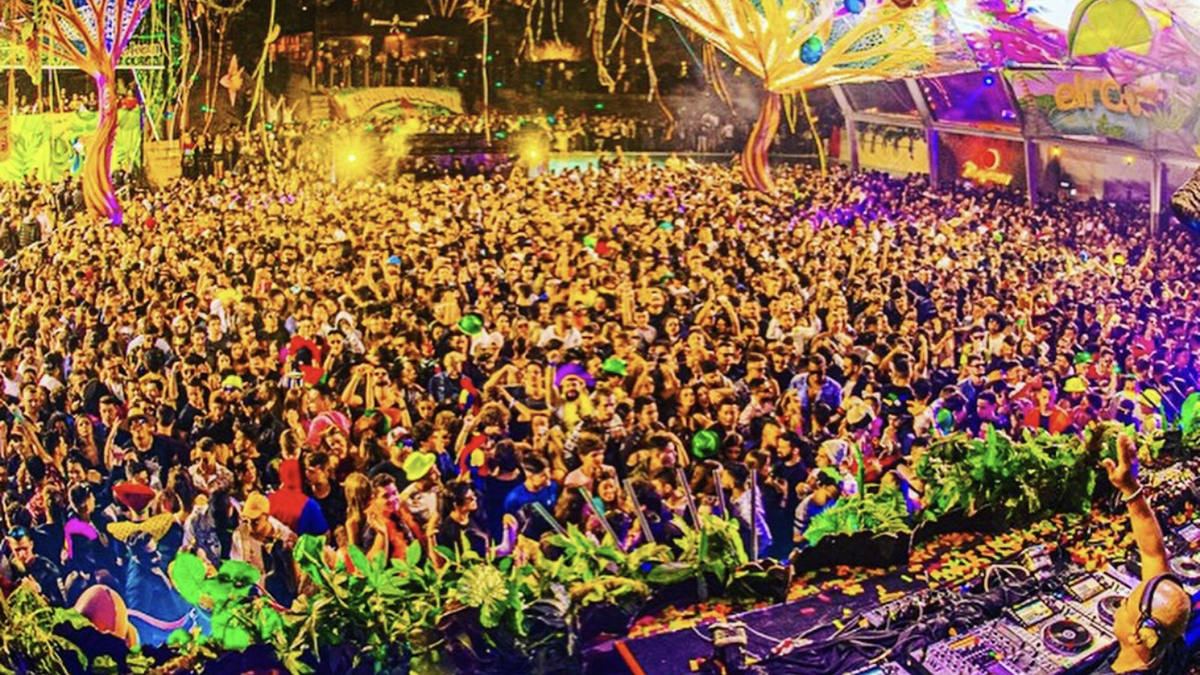
Festivals expanding by going international isn’t a new thing. Festivals such as Lollapalooza are holding festivals in South America while the dance giant Ultra have gone worldwide with major events across Europe and Asia.
EXIT is one of the latest festivals to move beyond its home nation after organisers decided they would no longer hold the festival in Serbia. EXIT will instead launch a Global Tour, which will take in the sights of Montenegro, Egypt and Malta.
Moving into a new market can mean more than just upping sticks and taking your brand to warmer climates. Festival expansion can often mean thinking about how it fits into the culture of a new location while still being true what makes it unique in the first place.
Interstellar.plus is a strategic growth consultancy working across the entertainment and music industry to help brands and festivals expand into international markets. Here, founder and CEO Matthew Hoag gives his perspective on how festivals can successfully expand and what they need to consider when going global.

“Most festival brands that try to go international fail. Not because the brand isn’t strong enough. Because the architecture underneath it isn’t built to travel.
I’ve spent the last decade scaling cultural IP across borders — from the dance brand elrow expanding into 42 countries during my time as global commercial director, to the work my team now does for operators across the Balkans, MENA, Asia, and Southern Africa. The mistakes I see repeat themselves with surprising consistency. So do the things that work.
Three principles separate the brands that scale from the ones that stall.
The first is to find a partner whose DNA fits the brand. Everything else is secondary.
The single most important decision in international expansion is the choice of local partner — and it is also the one most often made for the wrong reasons. Operators get seduced by the biggest name in the territory, the most aggressive offer or the loudest pitch. The right question isn’t who can deliver the biggest event. It’s whose values, working culture and brand instincts genuinely match yours.
The local partner is not a vendor. They are a co-author of your brand in their market. They will make a thousand small decisions in your name when you are not in the room — about talent, about ton and about who gets invited and who doesn’t. If their DNA doesn’t fit yours, the brand that lands in their market is not the brand you exported. It is a copy at best, and a counterfeit at worst.
The partners who scale a brand well aren’t always the biggest. They’re the ones who understand the position you are defending, and who would defend it the same way themselves.
The second is to choose territories the way a chess player chooses moves.
Once the right partner is in place, the territory still has to earn the decision. Every new market either compounds your brand’s position or dilutes it. There is no neutral expansion.
The right next market isn’t the biggest one or the most flattering invitation. It’s the one where your brand fills a gap the local ecosystem can’t fill itself, where the audience is ready, where the regulatory environment isn’t going to absorb six months of your team’s time, and where the cultural translation is honest. Egypt was the right next step for one of my recent projects. The UK probably wasn’t. Both decisions take the same amount of strategic work to make properly.
And thirdly, build for compounding, not revenue.
A single successful edition is not expansion. Expansion is when edition five looks more like edition one of the original brand than edition four did. That requires deliberate infrastructure — brand guidelines that travel, production standards that hold, creative direction that adapts without dissolvin and a commercial model that doesn’t lose discipline as the geography widens.
The brands that compound do something most don’t. They say no to revenue that would dilute the position. They turn down sponsors. They walk away from markets. They protect the asset.
The next decade of live entertainment will not be defined by the established western markets. It will be defined by operators in the so-called peripheries who have built real audiences, real infrastructure, and real cultural authority. The question isn’t whether they can scale internationally. It’s whether they’ll do it on their own terms — or someone else’s.“
Find out more about Intersteller Plus here.
