

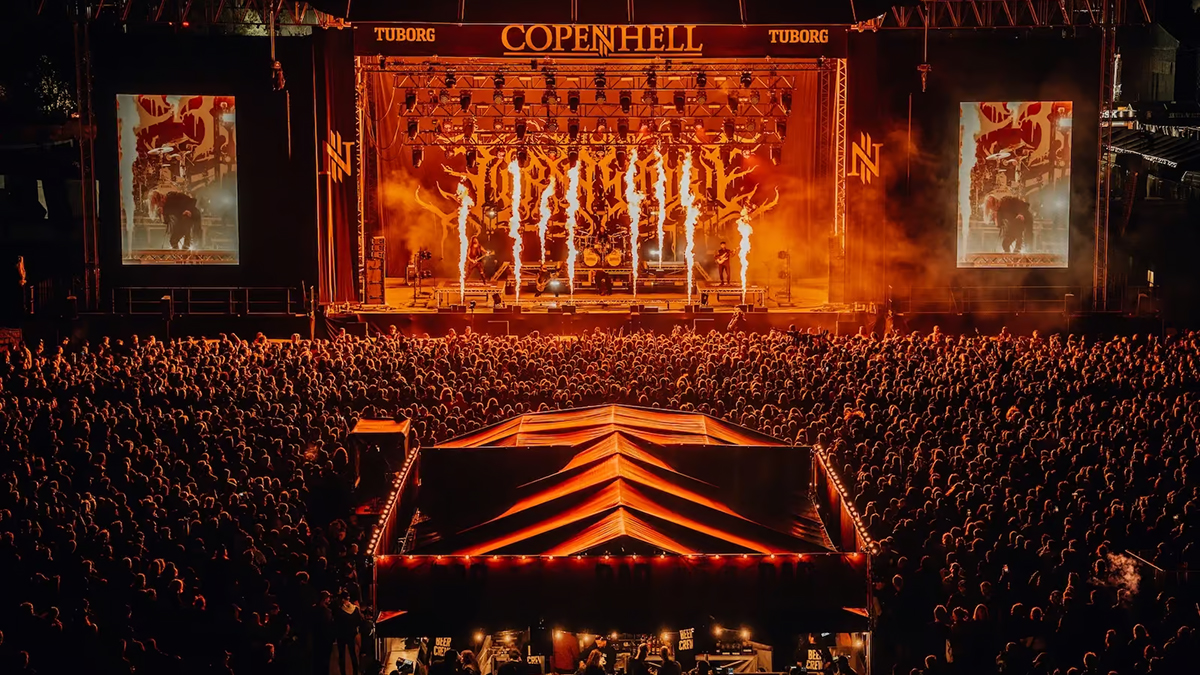
Festivals can present countless logistical challenges, from stage times to audience hotspots and traffic management. One thing that isn’t always given the most airtime is audience storage solutions. But last summer, Danish-based Mylocker, in cooperation with Volt were keen to find a more elegant solution for attendees to keep their belongings safe throughout the weekend.
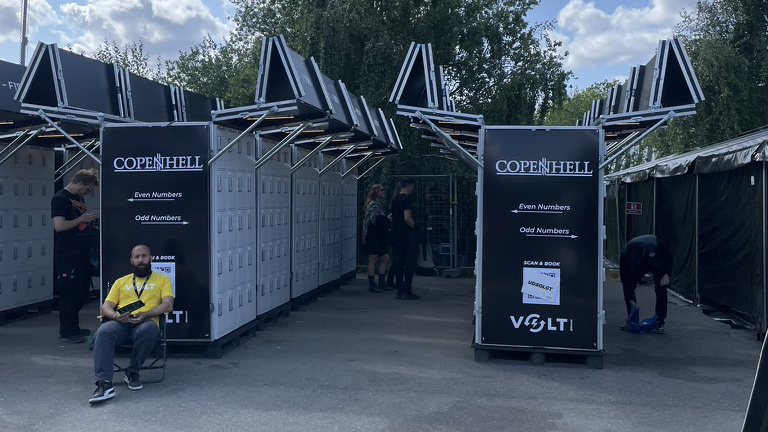
For several festivals, including Copenhagen’s Copenhell, the team brought and deployed Codelocks’ KitLockClassic solution, which could operate in remote locations without internet or any permanent infrastructure. The system allowed festival-goers to book and pay for the lockers online in advance or on-site, and the automated system reduced the number of staff on-site, lowering costs.
Ros Bayliss, global director of marketing at Codelocks, explains the benefits that a smart storage solution can mean for festival organisers and attendees alike.
Festival Insights: What operational challenges did you face in developing this project for festivals?
The central challenge when working on the Volt festival project in Denmark was designing a system that could work reliably wherever it’s located, with almost no infrastructure. To be viable for festivals, a solution needs to work without internet or power. That rules out a large number of smart locks available to buy today. The right solution also needs to cater to thousands of festival-goers, which rules out traditional keys because they require extra staff to issue and collect them, slowing the process and causing queues. It also doesn’t take much to lose a key, which puts revenue-generating lockers out of use for the entirety of the festival.
Festival Insights: Are you seeing a growing demand from festivals for temporary smart access solutions?
Yes, it’s a massive growth market. We have worked on many festival and event locker projects recently, with storage sites in Serbia, Belgium, the USA and more. Part of the reason for that is the simplicity and effectiveness of the solution: offline, self-service storage for your belongings purchased via an app. It just works. The Volt project sold out for the entire festival, and the company is already doing more to match demand.
The growth shows up in our enquiries, too. Operators in this space talk with one another, so successful solutions get passed on by word of mouth, and we’re getting monthly inbound enquiries because of it.
Festival Insights: The project involved integrating your API with Volt’s booking platform. How important was interoperability between the two platforms?
It’s very important. The whole unmanned, self-service model depends on it. We worked directly with Volt’s development team to integrate the Codelocks API with Volt’s own booking platform, so that a booking on Volt’s website automatically triggers the generation of a unique NetCode access code, which is then sent to the customer by SMS and email.
We’ve also worked with other projects, like non-profit student groups building car rental schemes or charities building dog play parks, who’ve effectively used some AI-assisted coding to get things working too. For a commercial operation, the simplicity of our system means the most important part becomes building a smooth front end for the customer.
Festival Insights: What operational benefits can self-service locker systems offer festival organisers?
First there’s the revenue that comes from renting them out. But unlike a cloakroom or key-based system, there’s minimal staffing required, meaning once the lockers are purchased and the app built, the costs involved are comparatively small. They’re also incredibly popular. As the Volt project shows, the lockers were immediately sold out, and the investment was recouped within around one year thanks to the uptake.
Being digital also opens the door for data collection, which can give organisers insights that a manual key- or padlock-based locker system wouldn’t provide. Data on volumes, peak times, average rental durations and more can help optimise operations but also create opportunities for packaged sales.
Making them self-service can also support better crowd management. You’re eliminating the need for a queue and thereby eliminating a potential pinch or crowding point. Minimising localised crowding has benefits for security, and improves the festival-goer experience.
Festival Insights: Beyond locker rentals, do you see smart locking technology being used elsewhere at festivals?
Smart locking can fit into all corners of a festival site. If something can be rented, then it can benefit from our NetCode tech. Shower blocks, bike storage, or any form of hire where people are currently queuing or relying on a member of staff with a key can be transformed into a self-service facility. Much of that comes down to how adventurous festival operators want to be in terms of what they provide customers; if you want to include five-a-side football pitches, VIP zones, or other bookable spaces, smart locking technology helps.
The same smart locks can be deployed for staff, too. They need to secure their belongings or book a shower. Festival operators may not choose to rent these out to generate revenue, but the high volume of users still needs management, which the self-service, app-based approach can simplify.
