
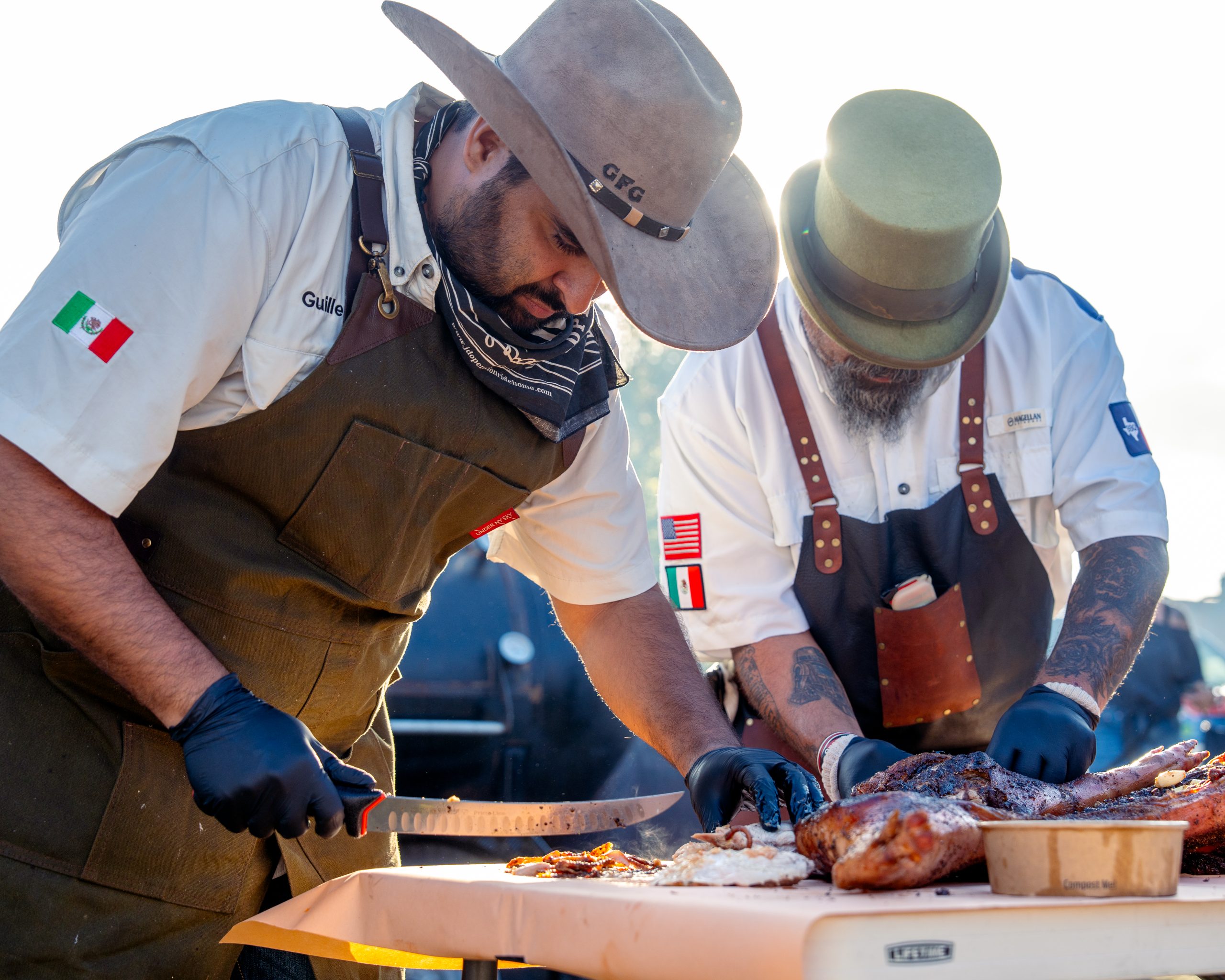
It doesn’t take a World Cup held across some of the best cities for BBQ to realise that low and slow food has taken over the world.
Whether it’s smash burgers in Shoreditch or brisket in Birmingham, BBQ is very much here in the UK. This, of course, has expanded to the festival world, where punters are expecting higher quality food for their higher price ticket.
Music festivals aren’t just competing with other music festivals anymore either. The same people spending their wages on a Two Door Cinema Club headline set are also demanding more from their £14 breakfast. Music heads aren’t just music heads. They’re foodies, fitness fanatics and wellness weekenders.
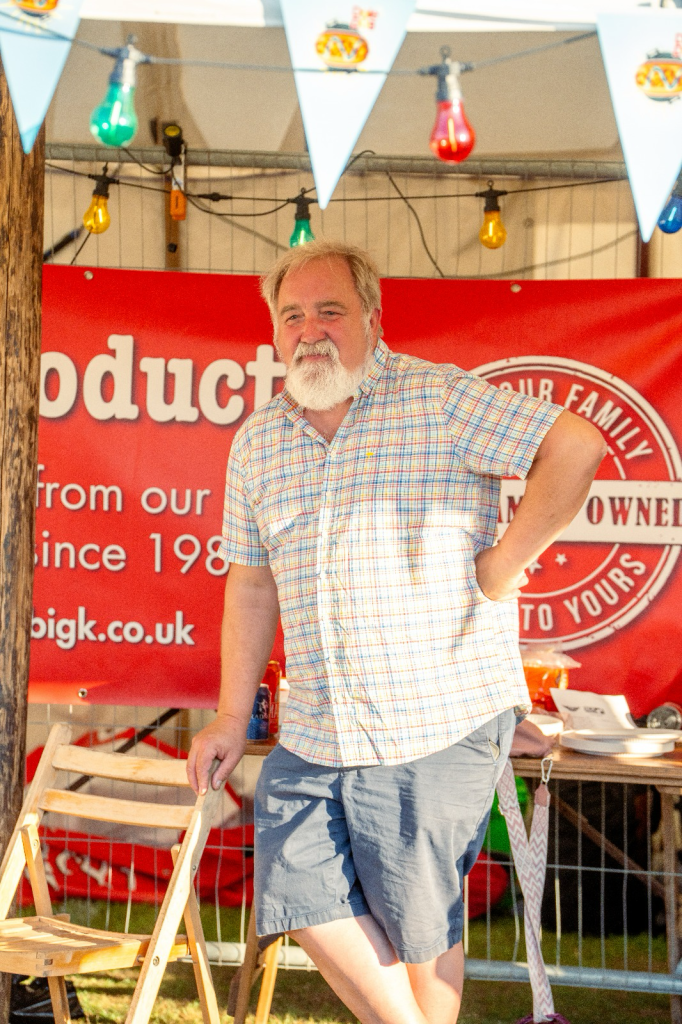
Ashley Peniston-Bird, founder and director of Smoke & Fire Festival, knows all about this. Ten years ago, long before TikTok food influencers found their audience through viral reactions, he started a gathering amongst hungry Americana enthusiasts who wanted a taste of Texas in the very un-like Texas town of Maldon, Essex.
But since then, Smoke & Fire has used BBQ as a way to bring different cuisines together through an almost Anthony Bourdain ethos, harking back to the history and diaspora of BBQ culture. Calling BBQ solely American is like calling football English. Yes, the modern game may have started here, but people were kicking circular balls before folks in Sheffield were. The same is true for global cultures who smoked foods long before the USA put it on the grill. And at Smoke & Fire, that’s all placed on a culinary pedestal.
Here, Ashley tells us about being ahead of the craze, how he’ll be there after it and how food is changing the festival industry.
Where did your love of food and BBQ come from?
Food has always been a huge part of my life, but not in a fine-dining sort of way. For me it’s always been about bringing people together. But some of my best memories are centred around cooking outdoors, whether that was with family, friends or simply standing around a fire sharing stories.
My love of BBQ came from discovering that there was so much more to it than just sausages and burgers. Once I started learning about American BBQ, Argentinian asado, South African braai and open-fire cooking from around the world, I became fascinated.
It wasn’t just about the food—it was the culture, the theatre, the passion and the community that surrounded it.
What started as a hobby soon became an obsession, and before long I realised there wasn’t really anything in the UK celebrating BBQ in the way it deserved. That’s where the idea for Smoke & Fire came from.
How did passion lead you to Smoke & Fire Festival?
It started quite simply. I was asked by a friend if I could come up with an event idea to raise funds for Essex Air Ambulance plus, and I wanted to create the sort of event that I would want to visit myself.
At the time there were food festivals and there were music festivals, but very few events where live-fire cooking was the star of the show.
People often assume Smoke & Fire is about celebrating American BBQ, but it’s much broader than that. Yes, American BBQ has had a huge influence, but so have cooking traditions from Argentina, south Mexico, South Africa, Europe and Asia. Fire is universal. Every culture cooks over it in one way or another.
Ten years ago, it was a leap of faith plus a desire to raise funds for the Air Ambulance. We had no guarantee anyone would turn up. We simply believed that if we created something authentic, centred around great food, amazing chefs and a welcoming atmosphere, people would come. Thankfully they did—and ten years later we’re still growing.
As someone who’s run a festival for ten years, how is food changing at festivals?
It’s changed beyond recognition.
Ten years ago food was often just something you grabbed because you were hungry before going back to watch a band. Today food can be one of the main reasons people attend an event.
Social media has played a massive part in that. People now discover chefs, recipes and cuisines from all over the world in seconds. Audiences are more adventurous and much more knowledgeable than they used to be.
Visitors don’t just want something to eat anymore—they want an immersive experience. They want to watch it being cooked, learn something, take photos, talk to the chef and recreate it at home afterwards. That’s transformed the role food plays at festivals.
Do you think food festivals are now competitors to traditional music festivals?
I think they’re becoming a different type of festival altogether.
Music festivals will always have their place, but audiences are increasingly looking for experiences that offer more than just one headline attraction.
People want value. At Smoke & Fire you can watch world-class chefs and pit masters, learn new skills and spend an entire day with family and friends. It’s not about replacing music festivals – it’s about creating something different that appeals to a wider audience.
What are some of the biggest challenges in running a festival in 2026?
Without doubt it’s the cost of delivering live events. It’s a massive risk.
From infrastructure, staffing and security to insurance, power and transport, everything has increased significantly over the last few years and it’s hard to keep up.
At the same time, consumers are understandably watching what they spend and may only attend one event or festival per year So as organisers, we are constantly trying to balance how to deliver an amazing experience whilst keeping ticket prices accessible.
The other challenge is expectation. Visitors rightly expect every event to be exceptional. That pushes us as organisers to continually innovate and invest in new ideas.
On the flip side, what opportunities are you discovering in the festival industry?
The biggest opportunity is that audiences now want complete experiences rather than single attractions.
People are becoming much more interested in outdoor living, craftsmanship, cooking, sustainability and spending quality time together. That opens so many opportunities.
For us, that’s led to concepts like our immersive live-fire dining experience called Ember Lounge. We also collaborate with other festival and events such as BBC Gardeners’ World Live, where we curated and designed a complete BBQ zone.
We’re finding that visitors aren’t necessarily coming because they’re ‘BBQ people’. They’re coming because they love food, they love entertaining, they love being outdoors and they want to learn something new.
That’s hugely exciting because it means Smoke & Fire is no longer simply a BBQ festival. It’s becoming a lifestyle event centred around fire, food and bringing people together.
And if there’s one thing I’ve learnt over the last ten years, it’s that people will always make time for great food, great company and memorable experiences. In everything we do we try to build around those three things.
How can a food festival offer something new in 2026?
By being authentic.
People can spot something that’s been created purely for Instagram a mile away. We constantly ask ourselves one question, and that’s what experience will people remember when they get home?
That might be learning to cook over live fire, sitting around a fire pit listening to acoustic music, sharing a meal with strangers in out Ember Lounge or watching chefs cook dishes they’ve never seen before. It’s about creating memories rather than simply selling food.
Smoke & Fire Festival takes place 15-16 August at Promenade Park, Maldon. Tickets are available now.
