
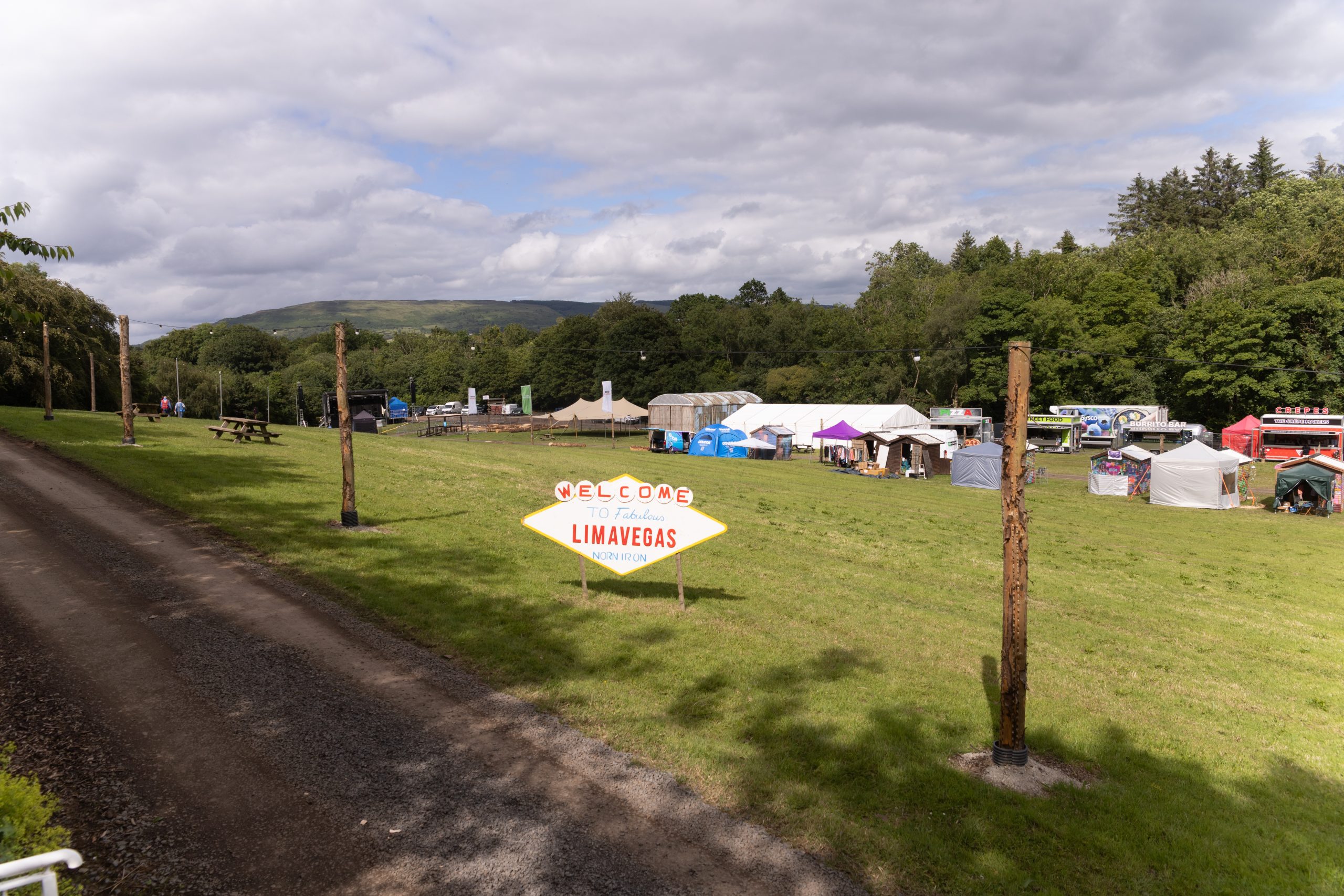
Stendhal Festival just very recently celebrated its 15th year in a field in Limavady, Northern Ireland. Across eight stages, a 10,000 strong pack dance to folk-trad or spend late nights around giant fires. Some people ride papier-mâché pigs while others carve intricate artworks in sand. It’s a magic mushroom trip in the best way.
Ross Parkhill is the person behind this, who started Stendhal Festival in 2008. Well, sort of. After lots of planning, 17 days before the festival gates were supposed to happen it was cancelled.
Objections from locals wasn’t a good first sign and resulted in three local council meetings happening during a summer recess, all to get their entertainment license. They were eventually successful, but alongside low ticket sales it was all a bit late to get fully off the ground.
Nevertheless, having paid off their debts from 2008, they tried again in 2011. It worked. Now, 15 years later, Stendhal is still working and stands as one of the very few independent festivals in Northern Ireland…for reasons we’ll get on to later.
By his own admission, Ross wasn’t really bothered about music until, on a whim, he visited Glastonbury in 2003 and had an awakening. “Glastonbury made me realise that you can introduce kids to the arts, and we do this to show you can carve out a career in the arts here in Northern Ireland. That’s a lot of the ethos behind Stendhal,” says Ross.
That mindset remains to this day. Around 80-85% of the programme comes from Northern Irish artists. This isn’t just about placing local and emerging talent on a pedestal and putting them in front of “bigger and broader” audiences says Ross. Rather, it’s through necessity in a live music ecosystem that’s underserved and needs some cultivating.
In Ross’s own words, funding for culture is at “the bottom of the pile” in Northern Ireland. Some of the reasons behind that are universal. After all, when government cuts happen, the arts are usually one of the first on the chopping block.
That said, Northern Ireland currently spends the least per head on the arts than any other UK and Ireland nation, and by a significant amount. According to Equity, the Northern Ireland-based trade union for performers and creative workers, Arts Council NI receives £5.07 per head of population. To compare, Arts Council Wales receives £10.51 per head, Scotland £20.73 and Ireland (Éire) £25.90.
What is unique to Northern Ireland though is one of the reasons why so little funding is offered to the arts. History.
“There’s a lot of political history in Northern Ireland where ultimately, still to this day, many things are green and orange, meaning nationalists and unionists,” says Ross. “I think there’s a real lack of value on contemporary culture because each party is too busy arguing for their traditional culture, be it language or be it marching bands. There’s a real lack of of value placed on the arts versus other sectors, and there’s an ignorance to contemporary culture that doesn’t come from their own community.“
“There’s a lack of political will for the arts in a post-conflict society,” Ross goes on to say. “Arts and culture can be huge in helping with that, but there’s a lack of value in recognising that I feel.”
In Ross’s words, Stendhal is a last stand when it comes to festivals in Northern Ireland, and points to cost of living and the fuel crisis as a major reason why festivals have been shutting its doors for good in recent years. There’s also COVID recovery, which Ross says there’s “definitely a big hangover from.”
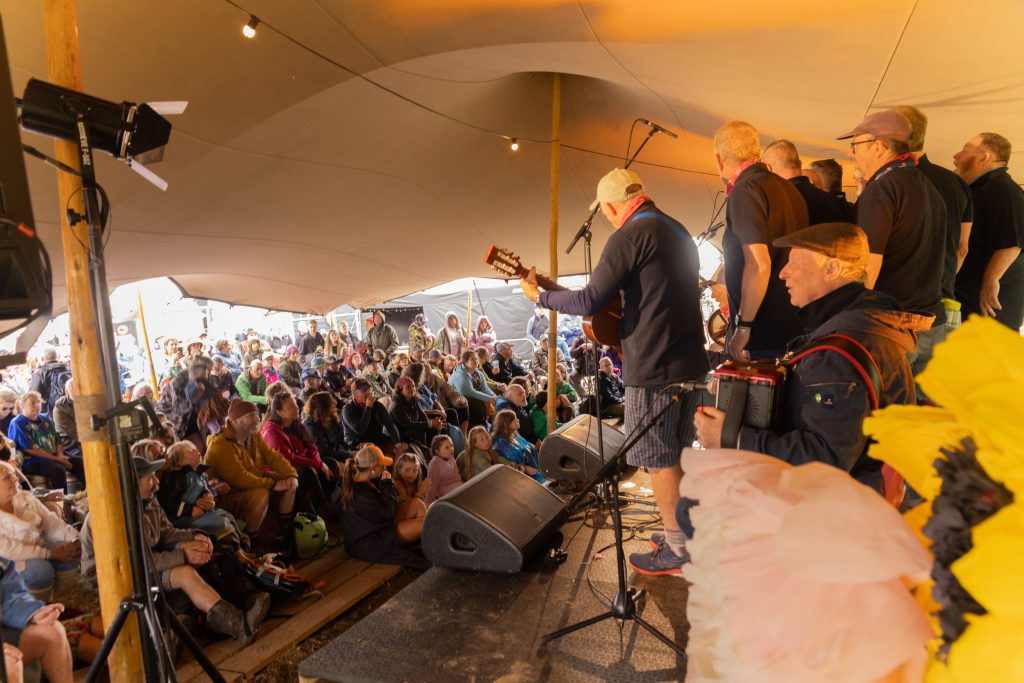
Between little government funding and the everlasting saga of COVID, something of a chasm is emerging in Northern Irish arts that is being filled by the big live music companies with big budgets. In a small country like Northern Ireland, where Belfast acts as its primary music hub, that means companies such as Live Nation.
While Live Nation do not own any venues in Belfast, it acts as a major promoter for some of its biggest venues such as Ulster Hall, O2 Belfast and the Waterfront Hall. They bring the biggest artists to the country’s biggest city, with the booking fees and everything else that comes with it. This has a ripple effect for Northern Irish festivals, whether it’s trying to book artist possibly signed to exclusivity clauses to how audiences choose to spend their money.
“We’re finding that people who want to see a household name will go to Belfast, pick a hotel room for the night and make a weekend of it, rather than going out locally or buying a festival ticket,” says Ross. “Festivals like us, we have to skirt around the side to get acts for the top of our poster.“
Competing with all these factors, Stendhal have taken a decision to focus on how they can deliver “more with less” going forward. More local talent, more favours from friends of friends and yes, more competing with entities who have billions in the bank and for some reason need a slice of Northern Ireland to add to their books. But that’s where Stendhal’s core audience comes into it.
By Ross’s own admission, over the years he probably spent a bit too much over his budget, booked a band he maybe couldn’t afford and added in a ferris wheel for good measure. But to put on a good show not in an arena, you need something different. Something that really can’t be bought. “The community side of it’s huge, without a doubt,” says Ross. “I hopefully think that is the future.”
But while there’s a lack of funding, straight up ticketing capitalism and just everything else a festival has to deal with to bring a bunch of people together for one weekend a year, Stendhal keeps going. And there’s a very obvious question to ask on this. Why?
“We’re the last doing what we do in our camping festival sector in Northern Ireland,” says Ross bluntly. “Bands cut their teeth here at the festival. So if we weren’t doing what we’re doing, then you know…where else?“
Stendhal Festival 2027 is confirmed for 1-3 July.
