

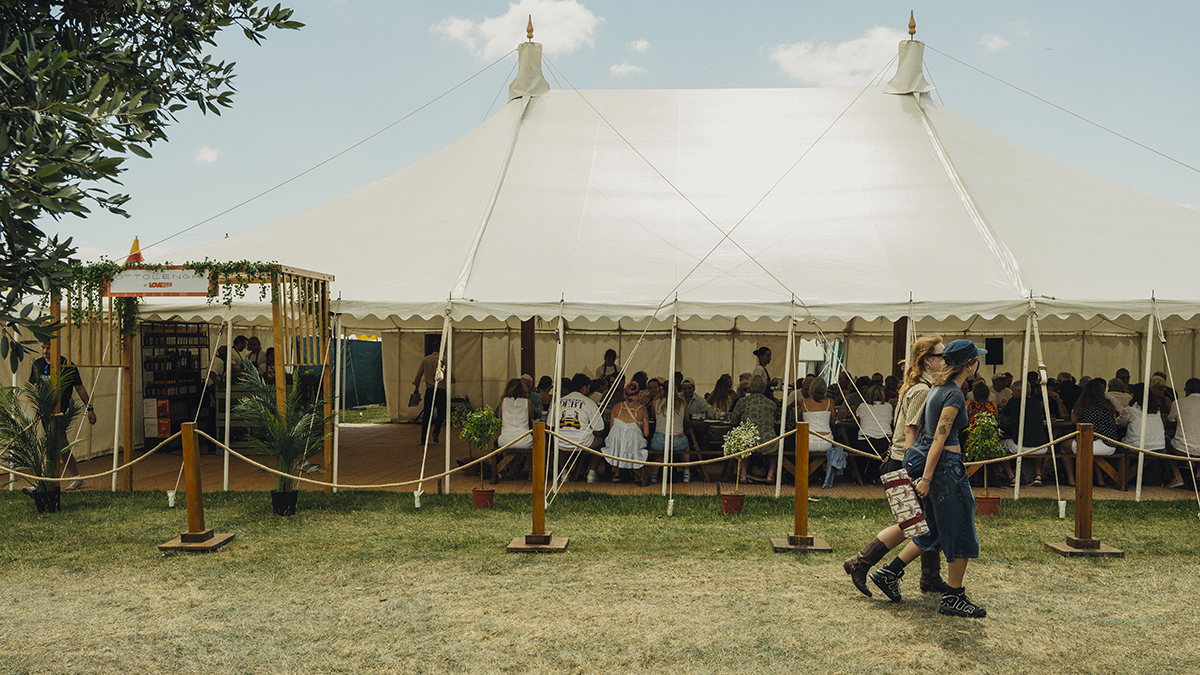
I’m being served fresh, crusty bread with miso butter with a basted corn on the side. There’s chicken skewers soaked in a coffee rub lands on my table with a side of something called a ‘toum sauce’ that’s far beyond my culinary knowledge to understand what it is. Either way, it’s delicious.
Wine is being refilled faster than I can drink it, which isn’t a problem for the 60 or so diners gladly accepting each glass. All these offerings come from the kitchen of the revered chef Yotam Ottolenghi, whose food I’d only tasted through the cookery book recipes I’ve failed to perfect over many years. “This is well above my pay grade,” I say to myself as I go in for more cranachan parfait.
This isn’t in a London restaurant or gastropub. This is at East Sussex’s Love Supreme festival on a heatwave-hit July day. On the main stages you’ll find the afro-jazz of Ezra Collective and the mesmerising funk and soul of Jalen Ngonda. But in this tent, it’s all about the food.
This was all orchestrated by Togather who are putting a modern spin on the stereotypical festival food trader. Togather don’t just provide burger vans, they deliver fine dining experiences in farmlands, transforms woodlands into temporary culinary destinations and brings acclaimed chefs usually found in Mayfair to (hopefully not) muddy fields.
“Going to a festival is more than just the music. It’s about the whole experience,” says Hugo Campbell, co-founder of Togather.
Hugo grew up spending his money on festivals but not necessarily the food offerings. He’d sustain his weekend on “beans and chips” and other dubious looking dishes. That’s not surprising, as food wasn’t exactly a major festival experience a decade or so ago. Rather, food was just a form of rave sustenance.
As he grew older, Hugo wanted something different than deep fried potatoes from a bag. “Our inspiration comes from having worked on festivals for a really, really long time and being frustrated by lots of aspects about how they work and the quality,” says Hugo. “We wanted to try work that out.”
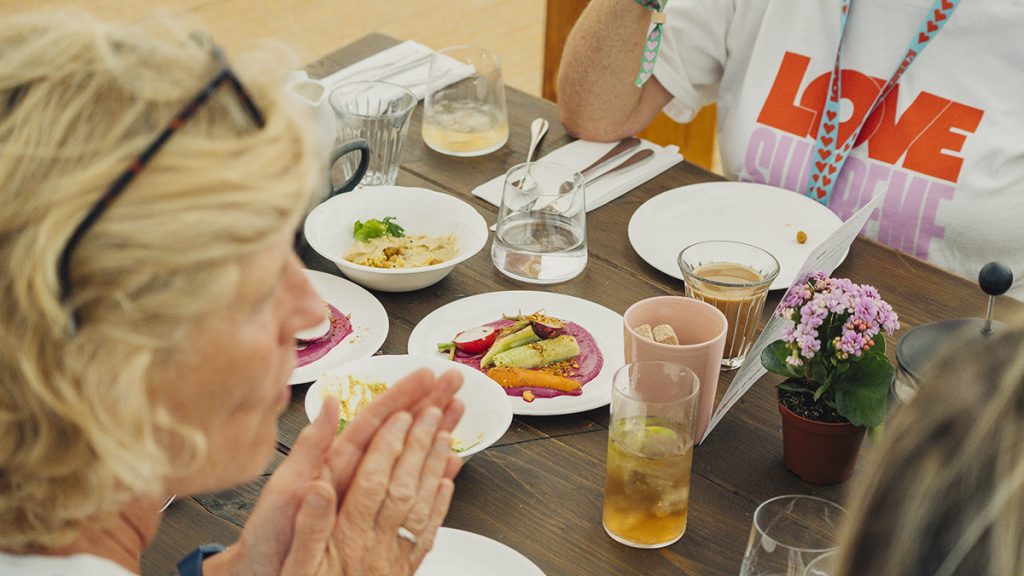
Through more open-minded festivals and modern food companies such as Togather things have shifted over the years. Major weekenders such as Big Feastival and Wilderness were early in bringing high quality food to festivals, and both offer premium food packages for those willing to pay the extra. Other festivals have followed suit over the years. Your average weekender offers bao alongside smash burgers and countless vegan options. What first began as a trend adopted by a handful of festivals has become the expected norm.
This isn’t just about food, though. Love Supreme offered extra perks, such as VIP areas that overlooked the main arena. Northamptonshire’s Shambala Festival introduced its ‘Dragonfly Camping’ area for 2026, which for an extra £45 offered exclusive pitching spots, private bars and remarkably clean toilets. Luxury experiences aren’t restricted to a perceived audience ‘type’ either. ArcTanGent, the experimental metal festival near Bristol, hosted VIP areas that looked like they were shipped straight from Marbella. You can now get your pump on in the dedicated gym at Creamfields or spend the day in bubbling hot tubs.
All this speaks to a new type of festival-goer, thinks Hugo. “Food is like far more intertwined into culture and identity in a way that Gen Z might now assume is what happens when you go to a festival. They don’t even think about the fact that food wasn’t a part of that experience,” says Hugo. “To me, back in the day, food wouldn’t even be a second thought.“
Another aspect of this is how younger generations are choosing to spend their dwindling money. “In the noughties people were going to multiple festivals per season. I certainly was because the ticket prices were a lot more affordable. Now, Gen Z are really only attending one festival a year and want more from it,” says Hugo.
That said, Gen Z go to more festivals than any other generation. Research from Mintel found that 41% of UK adults plan to attend a music festival within the next 12 months, which rises to 48% for Millennials. For Gen Z, that’s 58%. This is a vital audience for any festival, says Hugo, but this audience is “much more picky and choosy about the festival they’re going to” he adds. “Audiences are not spreading all of their costs across multiple events, they’re spending their festival money on a holiday experience.”
The festivals which are thriving, thinks Hugo, are the ones who are very much in tune with these changing demographics and the festivals who know their own identity and crowd. “It’s about appealing to a sub-sector of music fans who are who know that this festival is the place to be,” says Hugo. “That’s about music of course, but it’s about food too. Food is going to be anywhere between 5-20% of a festival’s overall taking. Now, festivals are realising that this is not only an area where you can distinguish yourself, but it’s an area where you can actually increase your own profit as a festival by getting really high-quality suppliers.“
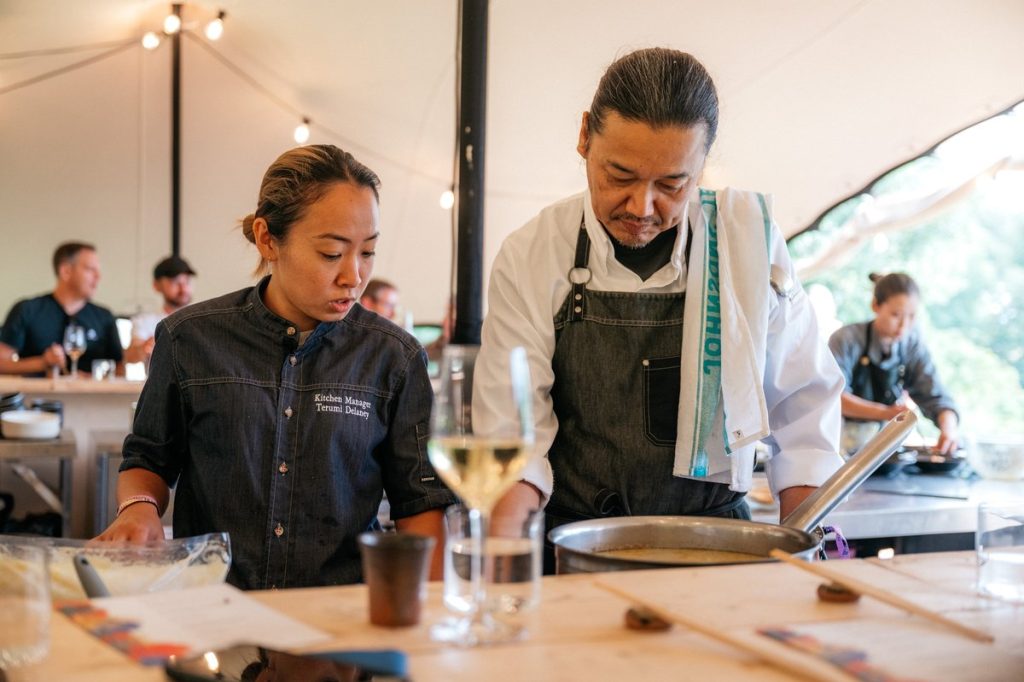
This is backed up by data collected by Togather throughout the 2026 UK festival season, who pulled in figures from over 700,000 food orders and more than a million transactions to discover what fans feed on most.
Rock fans love fried chicken it seems, and account for 41% of all main-course food sold at festivals which exist on the harder side of life. Unsurprisingly, country music fans love BBQ, accounting for 28% of all food sold at those events. Indian food is the top choice for jazz heads, while unsurprisingly chips are the most consumed item after 10pm.
The findings come as festival-goers are spending more on food and drink than ever. Togather’s data shows average spend per head climbed from around £21 in 2024 to an estimated £32 in 2026 – a rise of more than 50% in two years. This means spending on festival food is growing roughly five times faster than inflation. And festivals are diversifying to meet that demand.
“The range of cuisines is now far more diverse than it has been before, and that’s really getting more and more so,” says Hugo. “And one thing that I think is really important, that a lot of events don’t necessarily do, and maybe should, is tailor that to the demographic.“
The other side to all this opportunity is that food has become a new festival battleground for competition. It’s not necessarily about who can book the biggest headliner anymore or secure a ‘UK headline exclusive’. It’s about meeting heightened expectations, delivering something new year-on-year and satisfying an audiences eardrums as well as their bellies.
This may come with added pressure. “Because festival competition is so high it means that food is becoming a way to distinguish yourselves, so if you don’t do it people are going to notice,” Hugo says. But as posh fodder isn’t just a trend anymore it’s important to think beyond chips and beans. “Food is intertwined within our culture, and so are festivals,” says Hugo. “Now, food is becoming a far more important part of how a festival projects its own identity.”
