
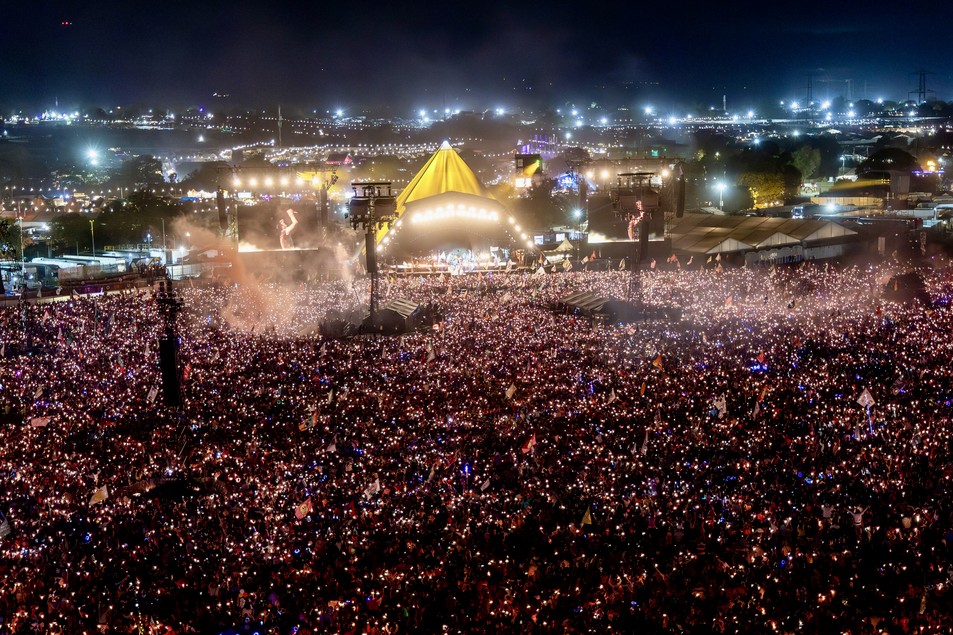
A forthcoming paper, set to be published in the Event Management journal, has argued that the consistent growth of large-scale and high-capacity festivals is incompatible with the need for urgent green and sustainable action.
Authored by the Centre for Events & Festivals (CEF) founder Dr Mike Duignan, A Greener Future’s Dr Teresa Moore and researcher Dr Adrian Bossey, the paper calls on licensing bodies to place a capacity-cap and other measures on festivals, saying that efforts in reducing a festival’s carbon impact cannot happen while they continue to seek growth.
“Large-scale greenfield music festivals can no longer ignore gigantism – the long-term tendency for festivals to grow in attendance, spatial footprint, production complexity, and resource intensity, such that absolute environmental burdens rise even when “green” operational efficiencies improve,” authors said in an article published by CEF.
The CEF cites large-scale festivals such as Glastonbury, Download and Belgium’s Tomorrowland in its findings, while also pointing to a wider industry shift in festivals continuing to increase scale over several years.
The paper argues that festival giganticism creates an “upward pressure on absolute environmental impacts,” including travel, food, energy and waste.
In response, festival growth needs to be addressed through “explicit governance” says the paper, which includes carbon budgets, licensing conditions, travel demand management and “deliberate caps or redesigns that reduce capacity, long-distance mobility and material throughput.”
“Alternatively, utilising urban sites with sufficient existing infrastructure and/or adopting smaller local models ,” it adds.
Dr Mike Duignan says: “Make no mistake: this is not a fringe concern but a mainstream one, in Britain and worldwide. Festivals have grown too big, too fast, with too few guardians to stop profit trumping planet.”
